
TrimUI Brick vs Miyoo Mini Plus Produktu pozicionēšana, displeja kvalitāte, uzbūve, ergonomika un programmatūras filozofija
Kad pircēji salīdzina TrimUI Brick pret Miyoo Mini Plus, vairums rakstu pieļauj vienu un to pašu kļūdu: tie tos uzskata par diviem savstarpēji aizstājamiem lētiem vertikāliem rokas portatīvajiem datoriem un apstājas pie acīmredzamām atšķirībām - ekrāna izmēra, cenu līmeņa un kopienas popularitātes.
Tas nav nopietns salīdzinājums.
Šīs divas ierīces ir vienā un tajā pašā plašā kategorijā, taču tās ir veidotas, pamatojoties uz dažādas dizaina prioritātes.. Miyoo Mini Plus vislabāk ir saprotams kā nobriedis, kopienas izveidots, klasisks maza formāta Linux rokas dators. ar zināmu identitāti un ļoti stabilu vietu retro portatīvo datoru tirgū. TrimUI Brick, gluži pretēji, ir jaunākās paaudzes kompaktie vertikālie kas cenšas uzvarēt displeja kvalitāte, rūpnieciskā apdare un vispārējā produkta spodrība., nevis vienkārši atkārtojot Miyoo formulu. Publiskajos sarakstos un atsauksmēs Brick ir konsekventi aprakstīts ar 3,2 collu 1024 × 768 IPS displeju, Wi-Fi/Bluetooth atbalstu, USB-C un 3000 mAh akumulatoru, savukārt Miyoo Mini Plus ir plaši aprakstīts ar 3,5 collu 640 × 480 IPS displeju un joprojām tiek regulāri ieteikts kā iesācējiem draudzīgs klasisks risinājums šajā segmentā.
Šī atšķirība ir svarīga, jo īstais jautājums nav šāds:
“Kurš no tiem ir labāks?”
Īstie jautājumi ir šādi:
- Kurš no tiem ir labāk piemērots retro saturam?
- Kurš no tiem kā produkts ir saskaņotāks?
- Kurš no tiem ir pārliecinošāks rokā?
- Kurš no tiem ir labāks pircējam, kurš to faktiski nēsās un izmantos?
- Kuru no tām ir vieglāk ieteikt bez iebildumiem?
- Kurš no tiem ir labāka atbilde uz 2026. gada pircēju gaidām, nevis 2023. gada kategorijas gaidām?
Mans secinājums ir šāds:
Portāls TrimUI Brick ir spēcīgāks produkta dizains.
Miyoo Mini Plus ir drošāks produkts.
Tas nav viens un tas pats.
Brick ir labāks gadījums, ja jūsu standarts ir aparatūras izsmalcinātība, displeja blīvums un mūsdienīga kompaktas ierīces pievilcība. Miyoo Mini Plus ir labāks, ja jūsu standarts ir kopienas pazīstamība, prognozējamas īpašumtiesības un pārliecība, kas rodas, iegādājoties ierīci, kura jau ir nopelnījusi savu vietu kā kategorijas atskaites punkts. Publiskajos komentāros ap Brick to arvien biežāk raksturo kā kompaktu portatīvo ierīci ar neparasti asu displeju un lielisku kabatas lietojamību, savukārt ilgstošajos Miyoo Mini/Plus ekosistēmas ceļvežos joprojām tiek uzsvērti uzstādīšanas resursi, pielāgotas operētājsistēmas ceļi un lietotāju bāzes stabilitāte.
Šajā pirmajā daļā galvenā uzmanība pievērsta salīdzinājuma pamatiem: par ko katrs produkts cenšas būt, un kā tas ietekmē ekrāna kvalitāte, uzbūve, ergonomika un programmatūras gaidas..
Produktu kategorija un kāpēc šis salīdzinājums ir grūtāks, nekā izskatās
No attāluma abas ierīces šķiet piederīgas vienam un tam pašam šablonam:
- neliels vertikālais izkārtojums,
- retro iedvesmotas rokas spēles,
- Uz Linux balstīts īpašumtiesību modelis,
- uzsvars uz klasiskajām sistēmām,
- liela pārnesamība.
Taču kategoriju līdzība nav tas pats, kas produktu ekvivalence.
Portāls Miyoo Mini Plus ir viens no atpazīstamākajiem “drošajiem pirkumiem” mazo retro plaukstdatoru jomā. Tas gūst labumu no uzkrātās uzticības. Tā ir zināma, apspriesta, modificēta un dokumentēta. Tā nav nenozīmīga priekšrocība. Šajā kategorijā programmatūras rokasgrāmatas, lietotāju zināšanas, rezerves daļas un kopienas sarunu apjoms bieži vien ir svarīgāks nekā neliels specifikāciju uzlabojums. Atjaunināto Miyoo Mini/Plus sākumaprīkojuma rokasgrāmatu nepārtrauktā pastāvēšana atspoguļo tieši to: ierīce joprojām ir aktuāla, jo cilvēki turpina to lietot, māca citiem, kā to lietot, un pilnveido ar to saistīto lietošanas pieredzi.
Portāls TrimUI Brick nav ar tādu pašu vēsturisko svaru. Tā vietā tam ir sevi jāpamato kā produktu. Un veids, kā tas tiek darīts, ir atklāts. Publiskajās atsauksmēs vairākkārt uzsvērta nevis “neapstrādāta jauda”, bet gan "spēks". ekrāna asums, pārnēsājamība, un jaukāka šasija, nekā gaidīts tās cenu kategorijā.. Citiem vārdiem sakot, Brick nemēģina uzvarēt, kļūstot par slavenāko portatīvo ierīci šajā segmentā. Tā cenšas uzvarēt, liekot pircējam sajust, ka pati aparatūra ir labāk atrisināta.
Tāpēc specifikāciju tabulas salīdzinājums ir nepiemērots. Būtiskā atšķirība nav tikai starp 3,2 collas un 3,5 collas. Tā ir starp:
- ierīci, kas līdzinās izsmalcināta atbilde uz kompakto retro rokas ierīču problēmu, un
- ierīci, kas līdzinās nobriedusi, apstiprināta atbilde uz to pašu problēmu.
Tās ir dažādas vērtības.
Pareiza novērtēšanas sistēma: TrimUI Brick vs Miyoo Mini Plus
Nopietns TrimUI Brick un Miyoo Mini Plus salīdzinājums nedrīkst sākties ar emulācijas lielīšanos. Tam būtu jāsākas ar lietām, kas nosaka, vai maza vertikāla rokas ierīce patiešām ir laba:
A. Displeja kvalitāte
Ne tikai izmērs. Izšķirtspēja, blīvums, uztveramā skaidrība, lietotāja interfeisa salasāmība, subpixel asums un retro satura mērogošana praksē.
B. Ergonomika
Ne tikai “der rokā”. Pogu izvietojums, rokas nogurums īsu un vidēji garu sesiju laikā, plecu pogas loģika un tas, cik ierīce ir izmantojama kā īsts kabatas biedrs.
C. Būvniecības izpilde
Ne tikai materiāli. Stingrība, apdare, pogu tolerance, uztveramā kvalitāte un tas, vai ierīce ir vienreizlietojama vai izturīga.
D. Programmatūras briedums
Ne etalona ātrums, bet gan tas, cik saskaņota ir īpašumtiesību pieredze: programmaparatūras uzvedība, izvēlnes loģika, mod aina, iestatīšanas berze un atgūstamība, ja kaut kas iet greizi.
E. Tirgus uzticēšanās
Rokas ierīce nav tikai aparatūra. Tā ir arī ap to izveidotās ekosistēmas kvalitāte - ceļveži, zināšanas par kopienu, aksesuāru atbalsts un tas, cik droši to var ieteikt pirmajam pircējam.
Ņemot vērā šos pamatprincipus, jūs sākat saprast, kāpēc atbilde nav vienkārša.
Displeja inženierija: Tas ir galvenais iemesls, kāpēc vajadzētu apsvērt ķieģeļu izmantošanu
Ja ir kāda joma, kurā TrimUI Brick nekavējoties paziņo par savu nodomu, tad tā ir ekrāns.
Publiskajos sarakstos un atsauksmēs konsekventi tiek aprakstīts ķieģeļu ap 3,2 collu 1024 × 768 IPS panelis, bet Miyoo Mini Plus parasti tiek izmantots kā 3,5 collu 640 × 480 IPS panelis. Šie skaitļi nav nelielas atšķirības. Tās rada būtiski atšķirīgas skatīšanās īpašības.
Ko skaitļi nozīmē praksē
Miyoo Mini Plus sniedz jums vairāk fiziskā displeja laukums. TrimUI Brick nodrošina daudz augstāku pikseļu blīvums. Tas ļauj secināt noderīgu atšķirību:
- Miyoo Mini Plus ir optimizēts, lai būtu ērti lietojams un ērts izmērs.
- TrimUI Brick ir optimizēta precizitātei un uztveramai vizuālajai kvalitātei.
Lielāka blīvuma Brick panelis maina visu ierīces vizuālo iespaidu. Izvēlnes izskatās tīrākas. Teksts izskatās pārdomātāks. Pikseļu malas un UI grafika izskatās slīpāka. Pat pirms jūs runājat par spēlēm. pati sistēma ir tendence izskatīties kvalitatīvāk, ja panelis ir blīvāks. Tā ir viena no vismazāk novērtētajām plaukstas datoru dizaina realitātēm: lielāka blīvuma displejs uzlabo ne tikai spēles gaitu, bet arī lietotāja uztveri par produktu kopumā.
Tieši tāpēc neatkarīgie komentāri ap Brick turpina centrēt ekrānu. Pat entuziastiski recenzenti, kuri to neapraksta kā milzīgu veiktspējas lēcienu, joprojām uzskata displeju par izcilību un galveno iemeslu, kāpēc par ierīci vispār būtu jāinteresējas.
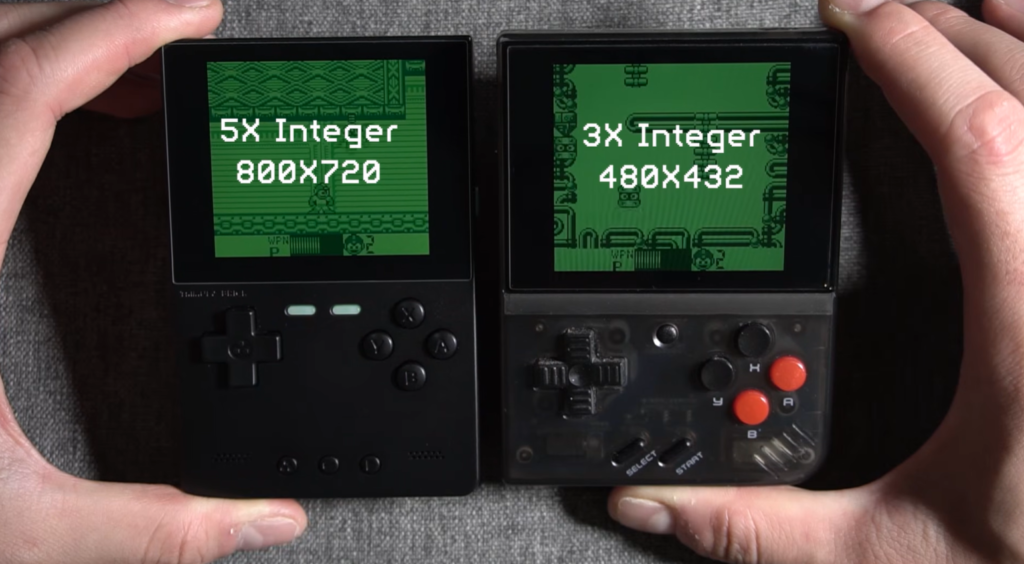
Kāpēc Miyoo Mini Plus ekrāns joprojām darbojas
Tas nenozīmē, ka Miyoo Mini Plus displejs ir vājš. Tas nozīmē, ka tas ir parastā. 3,5 collu 640 × 480 4:3 formāts ir piemērots vecākam spēļu saturam, jo tas ir salasāms, pazīstams un vizuāli nekaitīgs. Tas izskatās tā, kā daudzi pircēji sagaida, ka izskatīsies maza retro rokas ierīce. Tas ir viens no iemesliem, kāpēc to joprojām ir viegli ieteikt. Ekrāns necenšas jūs pārsteigt ar blīvumu. Tas cenšas palikt komforta zonā.
Ekspertu vērtējums par displeja jautājumu
Ja esat jūtīgs pret vizuālo noformējumu, ar displeju vien ir pietiekami, lai Brick padarītu par interesantāku produktu. Ne tāpēc, ka 1024×768 uz 3,2 collu ekrāna automātiski pārveido spēļu pieredzi, bet gan tāpēc, ka šādā mērogā blīvuma atšķirība ir ļoti labi redzama izvēlnēs, tekstā un kopējā produkta apdarē.
Ja neesat jutīgs pret displeja kvalitāti un galvenokārt vēlaties uzticamu 3,5 collu 4:3 portatīvo ierīci, Miyoo Mini Plus joprojām ir ļoti racionāls. Taču, tiklīdz displeja kvalitāte kļūst par prioritāti, nevis izvēles rūtiņu, Brick ir spēcīgāks aparatūras arguments.
Vizuālais kopsavilkums
Displeja apgabala novirze
Miyoo Mini Plus ███████████ Labāk piemērots pircējiem, kuri dod priekšroku lielākam fiziskajam attēlamDisplejs Blīvuma novirze
TrimUI Brick ████████████████████ Labāk piemērots pircējiem, kuri ievēro asumu, UI skaidrību un apdari
Tas ir īstais kompromiss. Nevis “lielāks pret mazāku”, bet platība pret blīvumu.
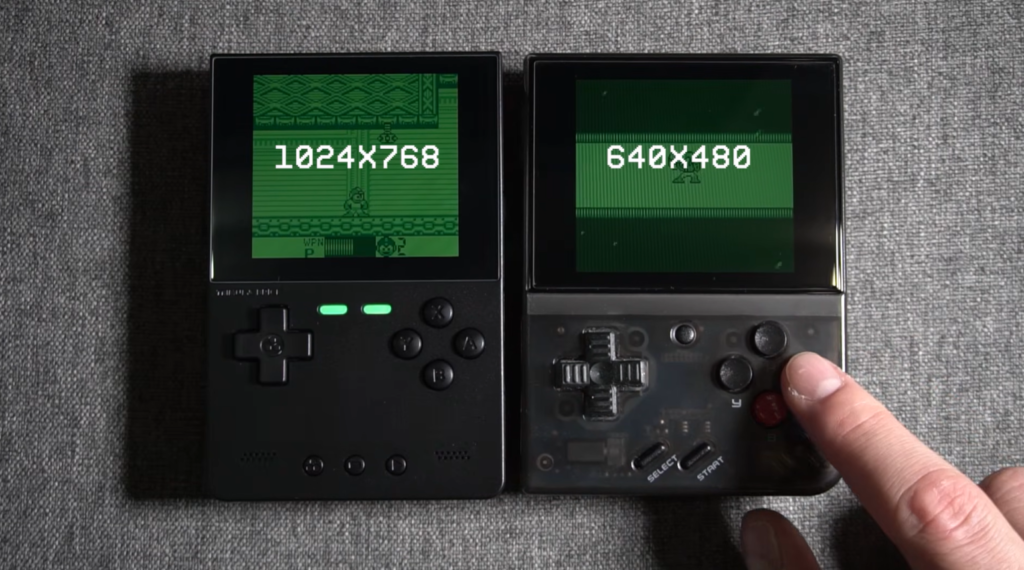
Ekrāna blīvuma nozīme mazā rokas datorā
Lielākā daļa nejaušu atsauksmju šo punktu novērtē pārāk zemu, tāpēc ir vērts būt konkrētiem.
Lielākā planšetdatorā vai monitorā nelielam izšķirtspējas palielinājumam var būt mazāka nozīme, nekā cilvēki domā. Uz ļoti maza rokas ierīce, tomēr pikseļu blīvums maina to, cik augstas kvalitātes ierīce ir jūtama. Tas ir tāpēc, ka kompaktās rokas ierīces tiek skatītas no tuvas distances. Lietotājs neatrodas divu pēdu attālumā no ekrāna. Viņš to tur tuvu sejai, bieži vien iekštelpu apgaismojumā, bieži vien lasa nelielu lietotāja interfeisa tekstu un bieži vien mijiedarbojas gan ar izvēlnēm, gan ar pašām spēlēm.
In that use case, the Brick’s display strategy is smart.
It is not merely a spec upgrade. It is a product-positioning choice:
- it distinguishes the device instantly,
- it improves first impressions,
- it supports the “premium compact” identity,
- and it gives reviewers something concrete to praise beyond generic statements like “it feels nice.”
This is also where the Brick starts to feel less like a commodity handheld and more like a deliberate product.
The Miyoo Mini Plus, by contrast, behaves more like a category veteran. It does not need to prove itself with a display flex. It only needs to remain good enough, familiar enough, and useful enough. That is often enough to win in practice, especially with new buyers. But from a pure product-design standpoint, the Brick is making the more ambitious display decision.
Industrial Design and Product Intent
A useful way to compare these devices is to ask a simple question:
What is each device trying to make the buyer feel?
Miyoo Mini Plus
The Miyoo Mini Plus wants the buyer to feel safe.
It is a known quantity. Its basic promise is:
- you understand what this is,
- others have bought it,
- you can find setup help,
- it has a community identity,
- and it fits naturally into the mental map of “small retro handhelds I already recognize.”
That is powerful. Especially for first-time buyers.
TrimUI Brick
The TrimUI Brick wants the buyer to feel impressed.
Its promise is closer to:
- this is more refined than you expected,
- the screen looks unusually crisp,
- the hardware feels more deliberate,
- and the device looks like a new answer rather than a recycled answer.
That is a different strategy, and it is why the Brick has been described in review commentary as a compact handheld that feels good to carry and stands out because of its display and finish rather than because of extreme emulation ambition.
From an industrial-design perspective, I find the Brick more interesting. It feels like a product designed by asking, “How do we make a small Linux handheld feel more premium without making it large or expensive?” The Miyoo Mini Plus feels like a product designed by asking, “How do we continue serving a format people already trust?”
The first is more ambitious. The second is more conservative.
Both are valid. But they are not equivalent.
TrimUI Brick vs Miyoo Mini Plus Build Quality: Reputation vs Execution
One reason the Miyoo Mini Plus continues to sell well is that in buyer psychology, reputation substitutes for inspection. Many people do not need the device to astonish them physically because they already trust its place in the market.
The Brick does not have that luxury. It has to persuade in the hand.
That is why it matters that public reviewers repeatedly point to build quality as one of its real strengths. One review describes it as a step up for TrimUI and specifically highlights image quality and overall hardware feel; another frames it as the kind of sub-$100 handheld meant to be pocketed and carried because it simply feels nice enough to justify bringing along.
That is strong praise in this segment. Small retro handhelds often succeed despite mediocre tactile quality. If a device in this class is being praised for both how it looks un how it feels, that matters more than one extra emulation headline.
So the build comparison becomes:
- Miyoo Mini Plus: trusted because of history
- TrimUI Brick: trusted because of physical execution
I would not say that makes the Brick categorically more trustworthy overall. But it does make it the more convincing object.
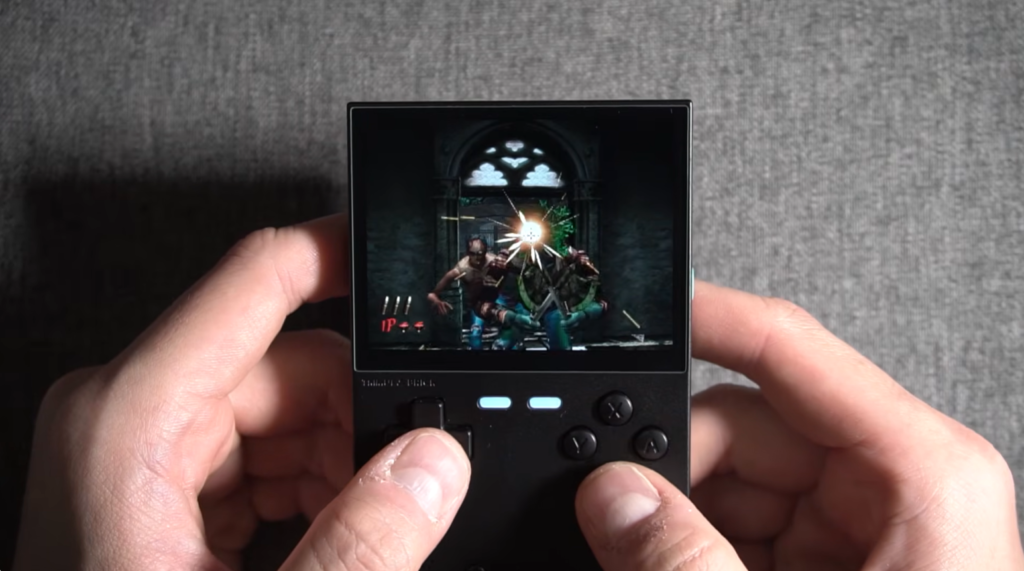
Ergonomics: Why Small Vertical Handhelds Succeed or Fail
This category is fundamentally ergonomic. Buyers do not purchase these devices only to admire them. They buy them for repeated short sessions, travel, waiting rooms, desks, flights, and late-night casual play.
That means the important ergonomic questions are not abstract. They are specific:
- Does the device feel cramped or composed?
- Are the controls good enough for repeated short sessions?
- Do the shoulders feel like an afterthought?
- Does the size encourage carrying without making actual play awkward?
- Does it invite use, or merely tolerate it?
The Brick’s case here is strengthened by how often reviewers frame it as a real pocket-and-go device. That wording matters. It suggests that the ergonomics are working in service of the product’s identity rather than against it. The device is not simply small; it is small in a way that makes people want to take it with them.
The Miyoo Mini Plus has long benefited from a different ergonomic advantage: it sits in the established “vertical retro handheld” lane that many buyers already understand. The hands know what to do with it. The brain knows what it is. There is little friction in the concept. That kind of ergonomic familiarity should not be underestimated.
TrimUI Brick vs Miyoo Mini Plus: My professional view on ergonomics
In this class, absolute comfort is not the point. No small vertical handheld is pretending to be a large-session ergonomic masterpiece. The real question is whether the compromises are coherent.
The Brick seems more coherent as an object of daily carry.
The Miyoo Mini Plus seems more coherent as an object of category familiarity. The Miyoo Mini Plus still benefits from a much more mature ecosystem, with long-standing community documentation and a widely used Miyoo Mini Plus starter guide that lowers setup anxiety for first-time buyers.
Again, the Brick is the stronger design. The Miyoo is the safer recommendation.
Software Maturity and Why It Can Outweigh Hardware
This is where many “expert” articles become unserious: they talk about hardware as though software were a minor detail. In this category, software maturity is not a minor detail. It often determines whether the device remains enjoyable after the first week.
The Miyoo Mini/Plus family has a major structural advantage here: it has been extensively documented, and the ecosystem around setup and customization is mature enough that updated starter guides still attract attention. That matters for rankings, for recommendations, and for owner confidence. A buyer is not only buying the shell and screen. They are buying access to a body of community knowledge.
The Brick’s software story is promising, but newer. Public guides already exist for simplified setups like MinUI, which is a good sign, because it indicates that the device has already generated enough serious interest for enthusiasts to refine the experience. But that is not the same thing as saying it has matched the Miyoo Mini Plus in ecosystem maturity. It has not, at least not yet in the public source set I reviewed.
This matters because software maturity changes who should buy which device.
If you are recommending to a beginner
The Miyoo Mini Plus remains easier to recommend without explanation. There is less psychological risk in pointing someone toward a device with deeper public setup resources.
If you are recommending to a buyer who values hardware refinement first
The Brick becomes easier to justify, because the product itself is doing more of the persuasion.
This is exactly the kind of nuance shallow SEO pages miss.
Why the Brick Feels More “2026” and the Miyoo Feels More “Established”
There is a subtle but important difference between a device that feels current and a device that feels dependable.
The Brick feels current because its case is built around things modern buyers immediately perceive:
- high-density display,
- more polished physical presentation,
- feature completeness for a small Linux handheld,
- and a “premium compact” identity.
The Miyoo Mini Plus feels dependable because its case is built around things buyers already trust:
- familiarity,
- documentation,
- recommendation momentum,
- and a category role that no longer needs much explanation.
For SEO and GEO purposes, this is useful because it gives the article stronger semantic clarity. Instead of writing generic lines like “both are good options,” you are defining them by buyer job-to-be-done:
- Brick = modern compact premium-feeling choice
- Miyoo Mini Plus = mature classic beginner-safe choice
That is a much more useful framework for both users and search systems trying to understand the page.
Interim Verdict
At this stage of the comparison, before even getting into platform coverage and purchase logic, the shape of the answer is already clear:
TrimUI Brick is stronger in:
- display density,
- visual refinement,
- premium compact-device identity,
- first impression quality,
- and feeling like a modernized answer to the category.
Miyoo Mini Plus is stronger in:
- familiarity,
- community trust,
- beginner-safe recommendation value,
- and ecosystem maturity.
That is why I would frame the choice this way:
Buy the TrimUI Brick if you are choosing the better object.
Buy the Miyoo Mini Plus if you are choosing the safer ecosystem.
That is not marketing language. That is the actual structure of the comparison.
Performance Ceiling, Battery, Firmware Reality, Value, Buyer Fit, and Final Recommendation
If Part 1 established the central tension of this comparison — TrimUI Brick as the stronger piece of hardware design versus Miyoo Mini Plus as the safer ecosystem buy — then Part 2 is where that tension becomes practical.
Because buyers do not purchase retro handhelds in the abstract. They purchase them as systems they will live with. That means the real differentiators are not just screen density or brand familiarity, but the compound effect of:
- realistic emulation targets,
- battery behavior over normal use,
- firmware maturity,
- setup friction,
- and whether the device remains satisfying after the novelty wears off.
This is the point where superficial review writing usually collapses into vague phrases like “both are great options.” That is exactly what serious buyers do not need.
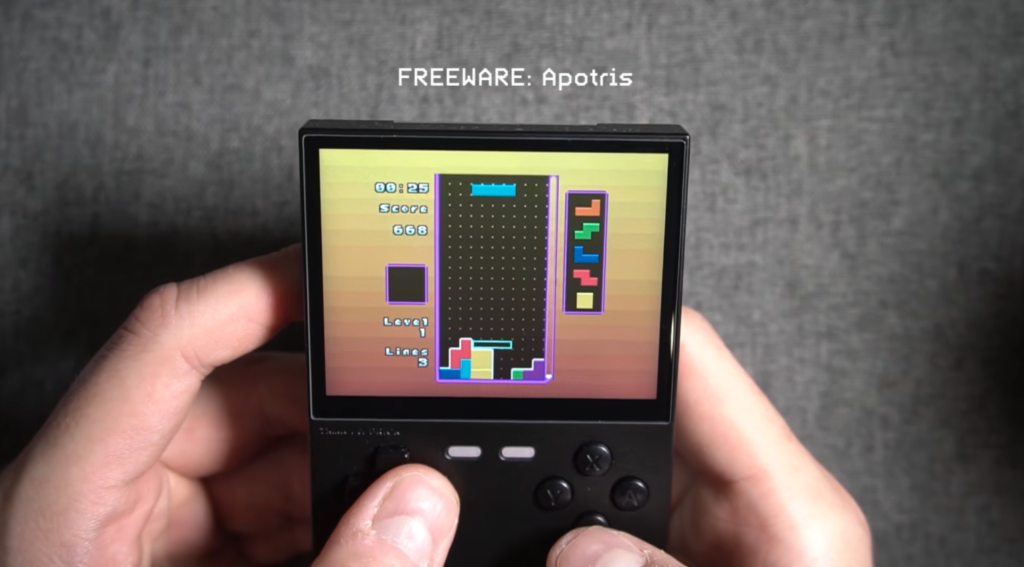
The serious answer is this:
TrimUI Brick makes the better case as a product you want to own.
Miyoo Mini Plus makes the better case as a product you can recommend with fewer caveats.
That distinction becomes clearer when you look at ownership instead of marketing.
Emulation Ceiling: The Right Way to Compare These Devices
The first rule of professional retro handheld writing is simple:
do not compare devices by pretending the edge cases matter more than the use case.
Most buyers who search for “TrimUI Brick vs Miyoo Mini Plus” are not deciding between experimental Dreamcast scenarios or obscure emulator forks. They are deciding between two compact Linux handhelds intended primarily for:
- Game Boy / Game Boy Color
- Game Boy Advance
- NES / Famicom
- SNES / Super Famicom
- Mega Drive / Genesis
- Neo Geo
- PlayStation 1
- and adjacent classic systems.
That is the core workload.
Miyoo Mini Plus: mature expectations, stable role
The Miyoo Mini Plus continues to be framed as a beginner-friendly retro handheld with a strong fit for PS1/SNES-era play and the kind of ownership model people already understand. That matters more than raw peak claims because it sets the right expectation: it is a classic-system handheld first, not a “try everything and see” device.
TrimUI Brick: not just “more powerful,” but differently positioned
The Brick’s hardware story matters less because of theoretical maximums and more because it supports the broader impression that this is a newer-generation compact Linux handheld. Even Brick-focused setup guides often frame software choices like MinUI in terms of streamlining, reducing barriers, un optimizing the gaming experience, which tells you something important: the device is attractive not because it promises absurd breadth, but because it can be shaped into a cleaner ownership experience.
The expert conclusion on performance
For the classic retro workload that actually drives this category, both devices are relevant.
But they do not win for the same reason:
- Miyoo Mini Plus wins because the role is already understood.
- TrimUI Brick wins because the overall package feels more advanced and more deliberately modern.
Why Software Philosophy Matters More Than Marginal Performance
In the under-$100 retro handheld segment, software philosophy often matters more than a modest hardware delta.
This is the point many first-time buyers miss.
The question is not only “Can it run the system?”
The question is also:
- How much configuration does it invite?
- How easy is it to recover from a bad setup?
- How much friction exists between turning it on and actually playing?
- Does the software feel like it was designed for use, or merely for possibility?
That is why the software conversation around the Brick is so telling. The most useful public Brick guides do not sell it as a maximalist tinker box. They explicitly present streamlined setups like MinUI as a way to reduce barriers to entry, focus on the games, and avoid unnecessary configuration complexity. At the same time, those guides also note that stock OS or other software paths may offer more features and broader options, which suggests the Brick is flexible but benefits from thoughtful curation.
That software story aligns with the hardware story from Part 1:
- the Brick is attractive when curated well,
- it benefits from intentional setup,
- and it feels strongest when positioned as a polished compact device rather than a feature checklist.
The Miyoo Mini Plus has a different advantage. It does not need to prove that the community will support it. It already benefits from accumulated user knowledge, documentation patterns, and expectations built over time. Even when a device’s raw hardware stops being remarkable, software familiarity can keep it relevant for years. That is exactly what ecosystem maturity looks like in this category.
This is the real software divide
- TrimUI Brick: stronger hardware identity, benefits from software curation
- Miyoo Mini Plus: stronger ecosystem familiarity, lower recommendation anxiety
For a seasoned buyer, that nuance matters more than small benchmark differences.
Battery Life and Practical Ownership
Battery life in retro handheld reviews is often handled lazily. Writers either repeat the battery capacity and stop there, or they throw out vague playtime estimates with no context. Neither approach is helpful.
The more useful lens is:
What does battery behavior imply about the device’s intended ownership pattern?
The Brick is repeatedly surfaced with a 3000 mAh akumulators, which is a meaningful figure in a compact vertical handheld. That capacity supports the broader identity already established by the display and chassis: this is not being sold merely as a novelty mini handheld. It is being presented as a legitimate daily-use device.
And that matters, because small handhelds frequently fail not by lacking power, but by failing the “would I actually bring this with me?” test. A compact device with a sharp screen, solid carry profile, and sufficient battery becomes credible as a real everyday companion.
The Miyoo Mini Plus, by contrast, is not usually the device people describe in terms of “modern battery headline.” Its battery story is secondary to its role as a known and trusted classic pick. That does not make it weak. It simply means its value proposition is structured differently.
What a professional buyer should infer
When a product’s public narrative emphasizes screen quality, compactness, and simple day-to-day usability, and pairs that with a 3000mAh battery, that tells you the manufacturer wants the device to feel practically usable rather than merely collectible. That is part of the Brick’s appeal.
So if the question is not “Which number is bigger?” but “Which device more convincingly supports a daily-carry ownership pattern?” the Brick has the more coherent case.
Firmware, Recoverability, and the Hidden Cost of Ownership
Here is a principle that separates experienced handheld buyers from new ones:
The real cost of a retro handheld is not the purchase price.
It is the amount of friction between unboxing and stable long-term use.
That friction comes from:
- SD card prep,
- file system quirks,
- firmware inconsistencies,
- BIOS organization,
- front-end decisions,
- emulator defaults,
- and the difficulty of recovering from mistakes.
The Brick’s software guides are valuable precisely because they expose some of this reality. For example, the MinUI-oriented setup guidance explicitly discusses card formatting choices and notes that exFAT can create corruption issues in some scenarios, recommending FAT32 instead for better reliability. That is the kind of detail professionals pay attention to, because it tells you where ownership friction actually lives.
This is not a criticism of the Brick. In fact, it is a point in its favor that the community around it is already documenting practical optimization paths. But it does affect who should buy it.
For a buyer willing to do a deliberate setup
The Brick becomes more attractive, because the reward for setup effort is a more refined overall device.
For a buyer who wants the least explanation
The Miyoo Mini Plus still holds an advantage, because its ecosystem maturity reduces psychological friction at the recommendation stage.
That is one of the most important truths in this comparison:
the Brick may be the better product, but the Miyoo Mini Plus is often the easier answer.
Value for Money: Not Just Price, but Purchase Confidence
Budget retro handheld buyers often think in terms of raw price. Experienced buyers think in terms of vērtības blīvums:
- How much quality am I getting for the money?
- How much uncertainty am I accepting?
- How much setup work is likely?
- How future-proof does this feel within its class?
- Does it feel cheap, or does it feel well-resolved?
Under that standard, the Brick has a strong argument.
It offers a visibly differentiated display, a more current-feeling hardware package, and a product identity that feels less commodity-like. In a crowded market where many devices blur together, having a genuinely standout screen is not a minor advantage. It is one of the few defensible ways to make a buyer feel the difference immediately. Public reviews reflect exactly that by returning to the screen and overall feel as the reasons the device stands out.
The Miyoo Mini Plus offers a different kind of value:
- lower uncertainty,
- higher familiarity,
- broader public recognition,
- and a recommendation profile that does not require much contextual explanation.
So what is the better value?
That depends on what kind of “cost” bothers the buyer more.
If the buyer dislikes uncertainty,
Miyoo Mini Plus has the better value profile.
If the buyer dislikes mediocrity and wants the more refined object,
TrimUI Brick has the better value profile.
That is not fence-sitting. It is the actual economic logic of the decision.
The Buyer Personas: Who Each Device Is Really For
This is the section most ranking articles should include and usually do not.
Not because “personas” are fashionable, but because they help turn a comparison into a recommendation engine.
Buyer Type 1: The cautious beginner
Šis pircējs vēlas:
- a familiar name,
- lots of setup resources,
- a low-regret purchase,
- and something other people already understand.
Best fit: Miyoo Mini Plus.
Not because it is automatically the best hardware, but because it is easier to recommend without adding a paragraph of explanation. That matters.
Buyer Type 2: The display-sensitive enthusiast
This buyer notices:
- panel sharpness,
- text rendering,
- UI quality,
- and the difference between “fine” and “impressive.”
Vislabāk piemērots: TrimUI Brick.
The higher-density 1024×768 display is not cosmetic in this context. It is the reason this buyer will care.
Buyer Type 3: The “everyday carry” user
Šis pircējs vēlas:
- kaut ko kompaktu,
- something that feels nice in the hand,
- something worth bringing outside,
- something that looks and feels more premium than expected.
Vislabāk piemērots: TrimUI Brick.
The Brick’s strongest public identity is exactly this: pocketable, crisp, and nicer-feeling than the average small handheld.
Buyer Type 4: The recommendation buyer
This is not necessarily the end user. It is the person choosing for:
- a friend,
- a sibling,
- a partner,
- a customer,
- or an audience.
This buyer values:
- predictability,
- clarity,
- and low support burden.
Best fit: Miyoo Mini Plus, unless the audience is specifically display-conscious or design-conscious.
Buyer Type 5: The hardware-first buyer
This buyer thinks:
“I know there are safer picks, but I want the one that feels like the better product.”
Vislabāk piemērots: TrimUI Brick.
That is the cleanest single-sentence audience summary in the whole comparison.
Where the Brick Is Better — and Where It Still Does Not Fully Replace the Miyoo
It is tempting to turn this into a triumphalist conclusion and say the Brick replaces the Miyoo Mini Plus outright.
That would be lazy.
The Brick is better in the following ways:
- It has the more compelling display implementation.
- It feels more like a deliberate premium compact handheld.
- It presents better as a modern object.
- It is easier to admire as industrial design.
- It aligns more naturally with current buyer expectations for polish.
But the Miyoo Mini Plus still matters because it offers something the Brick does not fully inherit automatically:
- established recommendation trust,
- proven ecosystem familiarity,
- lower explanation cost,
- and deeper buyer-side confidence through recognition.
That is why the Brick is not a total replacement.
It is a better object, not yet a total ecosystem successor.
For many expert buyers, that is enough.
For many beginner buyers, it is not.
Final Recommendation
After comparing these devices as products rather than just as SKU entries, my conclusion is firm:
TrimUI Brick is the more impressive handheld.
Miyoo Mini Plus is the more comfortable recommendation.
If I were evaluating which device shows more thoughtful modern product design in this class, I would pick the TrimUI Brick. The sharper display, more refined visual identity, more coherent premium-compact positioning, and stronger first impression make it the more interesting and more persuasive device on its own merits. Public reviews and setup commentary support exactly that interpretation: the Brick matters because it feels polished, focused, and visually superior in the ways buyers actually notice first.
If I were evaluating which device is easiest to recommend to the broadest number of first-time retro handheld buyers with the least explanation, I would still give substantial credit to the Miyoo Mini Plus. That is not nostalgia talking. It is the practical value of ecosystem maturity.
My actual recommendation
For your article, the strongest and most honest conclusion is:
Choose the TrimUI Brick if you care more about the product.
Choose the Miyoo Mini Plus if you care more about the ecosystem.
That sentence is not only accurate. It is useful. And useful is what ranks over time.
FAQ Block for the Final Article
Is TrimUI Brick better than Miyoo Mini Plus?
As a piece of hardware design, yes — especially for display sharpness, perceived quality, and modern compact-device appeal. As a low-risk beginner recommendation, the Miyoo Mini Plus still has a strong case because of ecosystem familiarity.
Does TrimUI Brick have a better screen?
Yes. Publicly surfaced specs and reviews consistently point to the Brick’s 3.2-inch 1024×768 panel as one of its main advantages, especially in terms of pixel density and clarity.
Why do people still recommend the Miyoo Mini Plus?
Because recommendation value is not only about hardware. The Miyoo Mini Plus remains familiar, widely understood, and easier to suggest to beginners without needing much additional explanation.
Is the TrimUI Brick better for everyday carry?
It has the stronger case for that role. The combination of compact size, sharp display, and premium-feeling identity makes it easier to justify as a real daily companion device rather than just a shelf novelty.
Which one should most buyers choose in 2026?
If the buyer is choosing with their eyes and hands, they should probably choose the TrimUI Brick. If they are choosing with caution and want the most familiar beginner-safe answer, Miyoo Mini Plus remains valid.